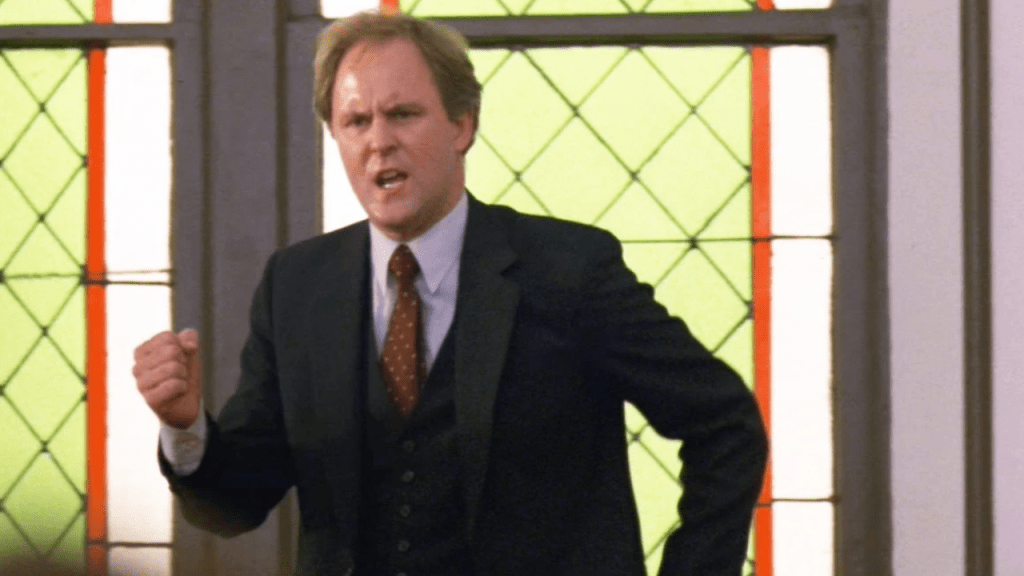
Sydney is, once again, cutting Footloose.
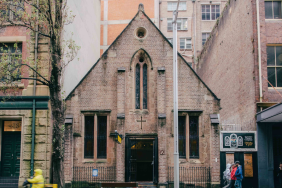
Barely a week after opening its doors inside a 150-year-old deconsecrated church, the Emerald City’s new queer arts and nightlife venue Divine Playhouse has been forced to close and cancel its entire program following backlash from conservative Christian groups.
“Offence cannot become a mechanism for eviction”
Because apparently Sydney’s latest threat to public order isn’t its chronic shortage of creative spaces, crushing cost of living or enduring dependence on pokies. It’s drag nuns?
The pop-up venue, operated by Heaps Gay inside the former Genesian Theatre on Kent Street, received a breach notice from its landlord ordering it to “cease carrying on offensive trade” or risk having its lease terminated.
Divine Playhouse has now shut its doors while organisers explore their legal options.
“Following pre-emptive action taken by our landlord, we have been forced to close the venue and cancel all events,” organisers said in a statement.
“Our priority has had to be the wellbeing of our artists, audiences, event organisers and staff.”
The closure follows protests outside the venue’s opening night last Wednesday, 8th July, when around 70 people from Catholic and other Christian groups gathered to oppose its programming.
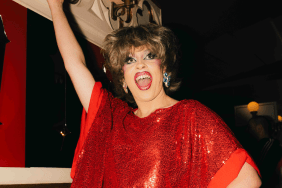
Critics accused the venue of mocking their faith through religiously inspired satire, including performers dressed as nuns, its “Unholy Water” house drink and an event titled Sunday Mess – An Unholy Brunch Party: The Resurrection.
That’s despite the building having been deconsecrated in 1932 and operating primarily as a theatre and community space for a casual seven decades.
Importantly, organisers had already attempted to address the criticism before opening. The original name, Unholy Playhouse, was changed to Divine Playhouse, while religious references were adjusted after concerns were raised.
Apparently those concessions weren’t enough though.
“The arts have always been a place where people ask difficult questions, challenge ideas and use humour, satire and performance to reflect on the world around us,” Divine Playhouse said.
“Not every work will resonate with every person, but the freedom to make and experience art is part of what makes an open, creative and democratic society.”
And that’s the genuinely troubling part of this whole saga. People are, of course, entitled to dislike a piece of art. They can criticise it, protest it, pray outside it or go home and watch something else.
What they should not be able to do is transform their personal offence into an effective veto over which artists are permitted to work and which communities are allowed to occupy space in Sydney.
As Night Time Industries Association vice-chair James Thorpe put it: “Offence cannot become a mechanism for eviction”.
“If it can, every artist who challenges power is vulnerable, as is every comedian who mocks a sacred cow and every queer space that refuses to make itself polite and palatable.”
FYI, the closure has wiped out far more than a few cheekily named parties.
Divine Playhouse had planned to support more than 1,500 artists, producers, technicians, promoters, performers, staff and small creative businesses across its residency, investing an estimated $650,000 into Sydney’s independent arts sector.
City of Sydney Deputy Lord Mayor Jess Miller has also pointed out that the city’s creative economy is worth around $14 billion.
In other words, this wasn’t merely a naughty cabaret making jokes inside an old church.
It was jobs. Performances. Commissions. Rehearsals. Audiences. New work. A place for emerging artists to try something strange without first demonstrating its profitability to a multinational entertainment company.
You know, culture.
Sydney should understand the value of such spaces better than almost anywhere. This is a city whose nightlife and live music ecosystem is still recovering from years of lockout laws, liquor restrictions, curfews, noise complaints, policing, COVID shutdowns and regulatory settings that repeatedly treated dancing, amplified music and spontaneous human enjoyment like suspicious activities requiring immediate containment.
For years, artists and venue operators were told Sydney wanted its nightlife back.
But apparently there were conditions: it can be vibrant, but not confronting. Diverse, but not too loud. Queer, provided nobody gets offended. Artistic, so long as nobody powerful feels uncomfortable.
Support has now poured in from artists, community groups and politicians, with Sydney MP Alex Greenwich describing the closure as part of a broader, worrying pattern of attacks against the city’s queer community.
“Queer-led businesses are part of Sydney’s cultural and economic infrastructure,” Pride Business Association president Jarrod Lomas said.
“They create jobs, commission artists, engage local suppliers, bring people into our precincts and give communities places to gather.”
Greens arts spokesperson Cate Faehrmann has also called on the Minns Government to defend the venue and the LGBTQIA+ community against what she described as “manufactured outrage from dangerous conservative activists who want to police what art can exist and who gets to belong in our city”.
Now, the community is preparing to answer back.
Pride in Protest has organised a snap rally outside Divine Playhouse at 420 Kent Street from 5.30pm this Friday, 17 July, inviting supporters to bring instruments, their “gayest outfit” and as many friends as possible.
“Far-right Christian bigots are trying to censor queer and trans art – we won’t stand for it,” organisers said.
“Join us on Friday for a snap action to wash away their hate preaching in a wave of music, queer joy and community love.”
Divine Playhouse is also seeking practical and financial support as it navigates the legal and operational fallout, with a petition launched calling for the venue to be allowed to reopen.
Sydney spent years being mocked internationally as a city where dancing was regulated, festivals were choked out and a venue’s entire livelihood could be threatened over a single 7pm noise complaint, or disco ball or band with too many members.
It now has a chance to prove it learned something.
Further Reading
A 150-Year-Old Sydney Church Is Being Reborn As A Wild New Live Music Venue